Get in Touch

Auto Lending Software Built on a Building Platform

Connect dealers and DMS, encode pricing and LTV policies, eContract and perfect liens, then service at scale. timveroOS gives banks, fintechs, and credit unions architectural control over auto lending.

Instant, explainable decisions. Clean funding with title and eLien management. No vendor lock-in, no multi-tenant data commingling. Go live on a production-grade auto lending product in 2 to 6 weeks with timveroAI.

timveroOS auto lending dashboard with dealer onboarding, eLien control, and LTV monitoring

Book a Personal Demo

See timveroOS configured for your auto lending product. Dealer flow, eLien, and XAI scoring, tailored to your case.

Request a Demo

Your Product. Our Bench.

  • $5.5B+ In Loans Managed
  • 13+ Regulated Markets Live
  • 5.0 ★ Verified Customer Rating
  • 2-6 wks From Signing to First Disbursement

Trusted by banks, fintechs, and credit unions running auto and consumer portfolios across 13+ regulated markets

  • AMIO Bank logo
  • Cartiga logo
  • Finom logo
  • GoGoProp logo
  • Aizdevums.lv Bank logo
  • Plumery logo
1 The Problem

Challenges in Auto Lending That Generic LMS Can’t Solve

Auto lending runs on participants, vehicles, dealers, and titling logic that off-the-shelf loan management systems weren’t built for. Banks face Tier 3-4 compliance pressure on every credit decision. Fintechs outgrow SaaS dealer-flow limits. Credit unions need member-focused product variants without per-user pricing destroying their unit economics.

  • Multi-Participant Structures and Collateral Complexity

    Auto borrowers come with co-applicants, guarantors, dealers as intermediaries, and vehicles as collateral with VIN, trim, mileage, and lien metadata. Generic LMS schemas assume one borrower per loan and bolt collateral onto a generic asset field. The Building Platform models people, vehicles, and channels as first-class entities.

  • Dealer Channel Dynamics

    Dealer portals, buy-rate and sell-rate grids, reserve payouts, stips governance, and DMS integrations are core to indirect auto lending, not a feature toggle. SaaS platforms treat dealer flow as a configuration of the borrower flow. The Building Platform treats dealers as a separate participant type with their own state machines, agreements, and approval workflows.

  • Titling, Liens, and eContracting

    Title perfection, eLien processes, GAP and VSC product handling, and insurance verification are where funding exceptions and chargebacks come from. The Building Platform handles eSign contracts, lien perfection on title or eLien rails, and bundle-aware product offers as native building blocks, with audit trails on every step.

  • LTV and Depreciation Pressure Across Portfolio

    Auto collateral depreciates while loan balance amortizes. Risk teams need continuous LTV monitoring, not application-time only. The XAI scoring engine monitors LTV pressure, depreciation curves, and portfolio exposure in real time, with audit-ready explanations for every change.

2 Lifecycle

Auto Loan Software With Zero Blind Spots From Dealer to Recovery

From the first dealer application to the last recovery touchpoint, timveroOS manages every auto lending lifecycle stage as configurable code and UI on a Building Platform. Dealer onboarding, underwriting, funding, titling, and servicing share one data model, one policy layer, and one audit log. Banks, fintechs, and credit unions run the same primitives, configured to their auto lending product.

Request a Demo
  • Dealer and Channel Onboarding Made Simple

    Dealer-first and embedded-ready, timveroOS equips dealers and channels with portals, widgets, and APIs connected to DMS systems. Set up KYB for dealers, agreements, and buy-rate or sell-rate grids. Configure onboarding workflows with stips governance and policy-driven decisioning. Dealers submit applications, monitor decisions, and upload stips in real time while lenders configure programs through the admin panel without vendor dependency.

  • Explainable KYC and Underwriting With Zero Guesswork

    Capture applications from dealer, web, or mobile, then run KYC and AML checks, validate devices for fraud signals, and use open-banking data where permitted. timveroOS supports soft and hard pulls for credit bureau reports, encodes affordability, DTI, LTV, and collateral criteria as policies, and produces underwriting decisions with explainable reason codes. Governed overrides and policy versioning support compliance and audit requirements across direct, indirect, and refinance programs.

  • Fund Cleanly With eContracts and eLien Control

    Assemble offers with APR, term, and fees. eSign contracts, validate stips, disburse funds to dealers or borrowers, and calculate dealer reserve payouts. Post entries to the general ledger automatically. Initiate lien perfection on title or eLien rails, verify insurance, and handle GAP and VSC products with clean audit trails. Funding packets validate before disbursement, reducing exceptions and preventing chargebacks.

  • Servicing, Collections, and Recovery on One Policy Layer

    Automate billing, autopay, and payment changes. Support extensions, deferrals, and hardship requests as policy code with logged promises-to-pay. Trigger pre-delinquency alerts, dunning cadences, and outreach workflows. Manage total loss claims, repossession, and remarketing with skip tracing. Real-time monitoring of LTV pressure, depreciation, and portfolio exposure delivers measurable delinquency reduction across the auto book.

One Building Platform for People, Vehicles, Channels, and Products

The timveroOS auto lending solution is built on a Building Platform. The platform models borrowers, co-borrowers, guarantors, dealers, and vehicles (VIN, trim, mileage) as first-class entities. It tracks liens, insurance, affordability data, and documents through configurable state machines: dealer onboarding, application capture, KYC and underwriting, funding, titling, servicing, and recovery. With this foundation, lenders compose direct, indirect, and refinance programs from common building blocks, extending them through code at the architectural level when their business requires it.

timveroOS auto lending architecture with entities (Participant, Vehicle, Lien, Loan), state machines (origination, servicing, recovery), and integrations (DMS, bureaus, payment rails, eLien) on the Building Platform
timveroAI

Launch Auto Lending Products in Weeks With timveroAI

AI brings the speed. The Building Platform brings the trust.

timveroAI is the AI acceleration layer for the Building Platform. Not a decisioning agent, not a no-code builder. A controlled, RAG-grounded implementation agent built on Claude Code, anchored on the Building Platform source code, atom library, and prior auto lending deployments. When your auto lending product needs a new variant (refinance, lease-to-own, dealer subvention, regional compliance), timveroAI composes the configuration in 3 to 6 weeks instead of 3 to 6 months, handling 70 to 80 percent of the work. Your team reviews and extends through the SDK.

Learn About timveroAI
  • timveroAI requirements gathering icon

    Requirements Gathering

    Natural-language dialog with your product, credit, and dealer-ops teams. timveroAI asks clarifying questions about dealer reserve, eLien rails, GAP and VSC handling, and regional titling rules instead of guessing.

  • timveroAI architecture checkpoint icon

    Architecture Checkpoint

    A plan with atoms (participant data, scoring policies, state machines, dealer workflows, eLien adapters) surfaced for your team to approve before any generation begins. Human-in-the-loop gates remain throughout.

  • timveroAI composition icon

    Composition From Building Blocks

    Code generation uses actual Building Platform components and prior auto lending deployment patterns. No invented APIs, no hallucinated imports. Production-grade code on infrastructure your engineering team owns, reads, and extends.

  • timveroAI shadow-run and validation icon

    Shadow-Run and Human-in-the-Loop

    Shadow-run mode validates configurations before production. Approval gates remain at every checkpoint. When timveroAI does not know something, it asks. It does not invent.

4 XAI Scoring Engine

XAI Scoring for Auto Loan Risk and Servicing

The Building Platform’s XAI scoring engine handles runtime credit and risk decisions for auto lending. Two different capabilities of the Building Platform, kept distinct on purpose: timveroAI accelerates implementation, the XAI scoring engine handles runtime decisioning. Models train in your environment on bureau, bank, device, and vehicle data. Every model output, every policy version, every override is logged. Production benchmark: 12x faster decisioning, +20% profit per loan when paired with portfolio analytics.

  • Early Delinquency and Cure Probability

    Predict which loans drift toward delinquency 30, 60, or 90 days ahead. Trigger pre-dunning workflows on the Building Platform before charge-off risk crystallizes.

  • Powerbooking and Synthetic ID Detection

    Compare application data against bureau, device, and vehicle signals to flag inflated trim packages, ghost co-applicants, and synthetic identity patterns at funding.

  • Depreciation-Aware LTV Risk Monitoring

    Track LTV pressure as vehicle collateral depreciates and loan balance amortizes. Surface portfolio concentration risk before it materializes.

  • Outreach and Dunning Cadence Optimization

    Score each delinquent loan on cure probability and recommend the contact channel, timing, and message that maximizes recovery without burning customer relationships. See full XAI scoring and portfolio analytics for runtime decisioning detail.

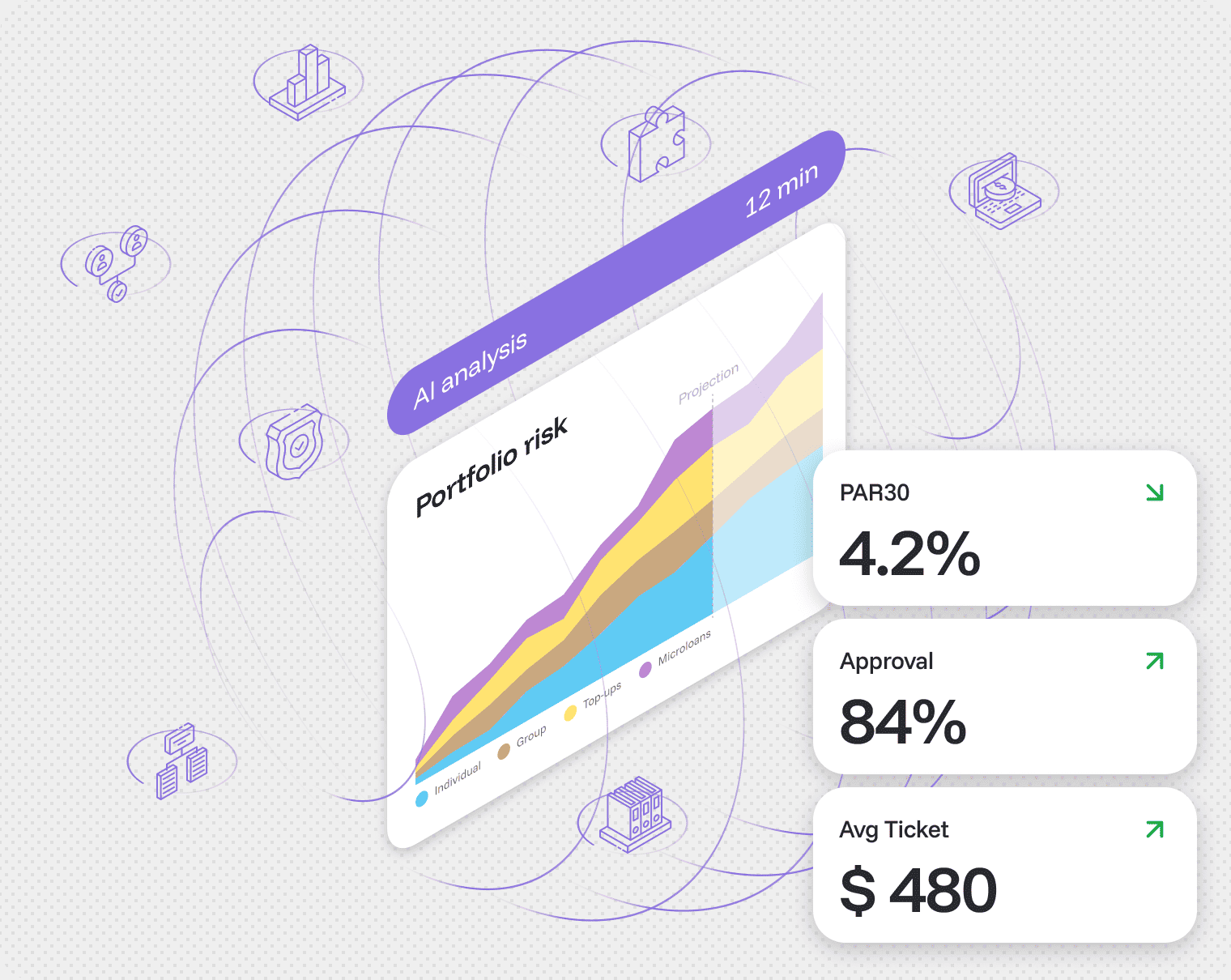
timveroOS XAI scoring engine for auto lending, showing portfolio risk projection by direct, indirect, and refinance cohorts alongside cure probability, LTV pressure, and depreciation KPI cards
5 Why timveroOS

Three Reasons Auto Lenders Choose timveroOS

Three reasons banks, fintechs, and credit unions choose timveroOS over generic SaaS LMS or 18-month custom builds for auto lending. Each reason maps to a Building Platform capability, not a feature checkbox.

  • Dealer-First and Embedded-Ready

    The Building Platform equips dealers and channels with portals, widgets, and APIs connected to DMS systems. Rate sheets, reserve payouts, and stips governance live in one place. Dealers submit applications, check decisions, and upload stips instantly. Lenders ship program changes through admin-panel configurations on the Building Platform, without waiting on vendor roadmaps.

  • Instant, Explainable Decisions Every Time

    Affordability, DTI, LTV, and collateral criteria encode directly into Building Platform policies. Underwriting decisions generate instantly and include explainable reason codes. Governed overrides and policy versioning support compliance and audit requirements. Risk, pricing, and loan-to-value logic apply consistently across direct, indirect, and refinance programs.

  • No Gaps in Titling, Liens, and Collateral Control

    Manage collateral accurately with eContracting and eSign flows, lien perfection on title or eLien rails, insurance verification, and GAP and VSC product handling. Funding packets validate automatically, helping ensure compliance and clean audit trails. This reduces funding exceptions, prevents chargebacks, and strengthens lender confidence in portfolio quality.

6 Built For

Auto Lending on timveroOS: Built for Banks, Fintechs, and Credit Unions

Three segments, the same architectural primitives on the Building Platform. Different operating models, same building blocks.

  • For Banks

    SaaS lending platforms force the bank’s credit model into someone else’s schema, and multi-tenant data commingling fails compliance review. timveroOS deploys in the bank’s own environment with architectural control over every credit decision, policy, and workflow. Policies as code, immutable audit trails, and XAI scoring give risk and finance the same transparent logic, while dealer portals and eLien handling cover indirect auto programs natively. See auto lending for banks at /bank-lending-software.

  • For Fintechs

    Outgrew SaaS limits on dealer flow and product logic? Can’t commit to an 18-month custom build? The Building Platform gives fintechs the architectural freedom of custom (full data and code ownership, deploy anywhere) with 3 to 6 week implementation through timveroAI. Common building blocks across auto, installment, retail, and BNPL on the same platform. Per-portfolio pricing, no per-loan surcharges. See auto lending for fintechs at /fintech-lending-software.

  • For Credit Unions

    A small IT team and per-user SaaS pricing don’t match a member-to-staff ratio. The Building Platform’s admin panel covers day-to-day operations. timveroAI handles configuration and product variant launches. Pricing is portfolio-tiered, not per-user: a credit union with 50,000 members pays for portfolio size, not login count. Member-focused auto loan structures (refinance, used vehicle, EV) compose from the same building blocks. See auto lending for credit unions at /lending-software-for-credit-union.

7 Customer Story

How AMIO Bank Launched Guarantor-Backed Lending on timveroOS

AMIO Bank, one of Armenia’s leading retail banks, needed a guarantor-backed lending product after three failed attempts with two previous vendors. The bank required full automation, regulatory compliance with the Central Bank of Armenia, and production deployment in months, not years. The Building Platform’s multi-participant entity model handled co-borrowers, guarantors, and complex consent flows natively, with architectural patterns that map directly to indirect auto lending (borrower plus guarantor plus dealer).

8x Faster Origination
95% Automation Across the Lifecycle
6 mo From Concept to Production

From Three Failed Attempts to a Production-Ready Lending Product

“After three failed attempts with two other vendors, timveroOS delivered a fully automated, production-ready guarantor lending solution in six months. The platform’s flexibility is the reason we now run our complete origination flow on it.”

AMIO Bank

Senior Lending Executive

Read the Full AMIO Bank Story
8 Differentiators

Why Auto Lenders Choose timveroOS

Four capabilities zero other auto lending vendors offer on a single platform, validated against Solifi, Shaw Systems, LoanPro, Open Lending, RouteOne, Provenir, and Nortridge product pages.

  • Policies as Code for LTV, Dealer Pricing, and Hardship

    Posting logic, fee rules, hardship workflows, and dealer reserve payouts live as version-controlled policies, not configuration screens. Immutable audit trail of every change. Zero competitors offer this on auto lending product pages.

  • Real-Time Decisioning Paired With eLien and Titling Control

    Most auto lending platforms split decisioning and collateral management across separate systems. The Building Platform handles both as native building blocks. Funding packets validate automatically, lien perfection happens inline, and chargeback rates drop.

  • Dealer Portal as a Native Building Block

    Dealer onboarding (KYB, buy-rate and sell-rate grids, stips governance) sits on the Building Platform as first-class entities with their own state machines. No third-party integration layer, no per-dealer fee escalation, no marketplace add-on.

  • $5.5B+ Managed Across 13+ Countries

    Hard portfolio number, validated across consumer, commercial, and auto programs on the same Building Platform. Zero auto lending vendors show portfolio dollar volume publicly. First-mover trust signal for procurement and risk committees.

9 The Choice

How timveroOS Compares for Auto Lending

SaaS loan management systems launch quickly but limit policy flexibility and audit depth, especially for indirect auto programs with regulator scrutiny. Custom builds give control but burn 18 to 24 months and a 5 to 10 engineer team before the first loan funds. The Building Platform is a third path: pre-built lending building blocks, deploy anywhere, policies as code, full audit, and timveroAI compressing implementation to 3 to 6 weeks.

Fast but capped

SaaS Auto Lending Platforms

Pros

  • Fast initial go-live
  • Lower upfront cost
  • Prebuilt dealer workflows for vanilla programs

Cons

  • Limited policy and UX flexibility
  • Vendor roadmap and data custody constraints
  • Per-loan and per-user fees escalate TCO at portfolio scale
  • Multi-tenant data commingling fails regulator review
Control but slow

Custom Auto Lending Build

Pros

  • Full control of code and UX
  • Tailored credit and dealer logic
  • No vendor lock-in

Cons

  • 18 to 24 month delivery risk
  • High build and maintenance cost
  • Engineering team as permanent cost center
  • Compliance modules built from scratch
10 Integrations

Your Auto Lending Stack, Integrated as Building Blocks

Auto lending integrations on the Building Platform are first-class building blocks, not marketplace add-ons. Your team adds new vendors through the Open SDK, or timveroAI composes them in days during implementation. No marketplace dependency, no per-call surcharges, no integration partner gatekeeping.

  • Dealer Management Systems (DMS)

    Real-time application capture, decision push-back, contract delivery, and funding confirmation. Whether your DMS is CDK, Reynolds, Dealertrack, or a regional provider, integrated as building blocks during deployment.

  • Credit Bureaus and Alt-Data

    Soft and hard pulls, thin-file alternative data, open-banking permitted use cases. Whether your bureau is Equifax, Experian, or TransUnion, composed into your underwriting policies, not bolted on.

  • Vehicle Valuation and Inventory

    Book value sources, inventory feeds, VIN-level data. Native participants in the collateral entity model, with policy access to LTV calculations and depreciation curves.

  • Title and eLien Rails

    State-specific title perfection and eLien processing flows handled as Building Platform building blocks with audit trails on every step.

  • Payment Rails

    ACH, card, instant pay, dealer disbursement. Composed for direct, indirect, and refinance funding paths. Bank file reconciliation automates against the same data model.

  • KYC, AML, and Fraud Signals

    Identity verification, device intelligence, and synthetic ID detection feed the XAI scoring engine. New vendors compose in days through the Open SDK.

  • Core Banking and GL

    Native GL posting from the Building Platform’s AccrualEngine into core systems. No middleware layer, no separate reconciliation queue.

  • Communications and CRM

    Borrower and dealer comms (email, SMS, in-app) and CRM sync as building blocks, not as a separate marketing stack.

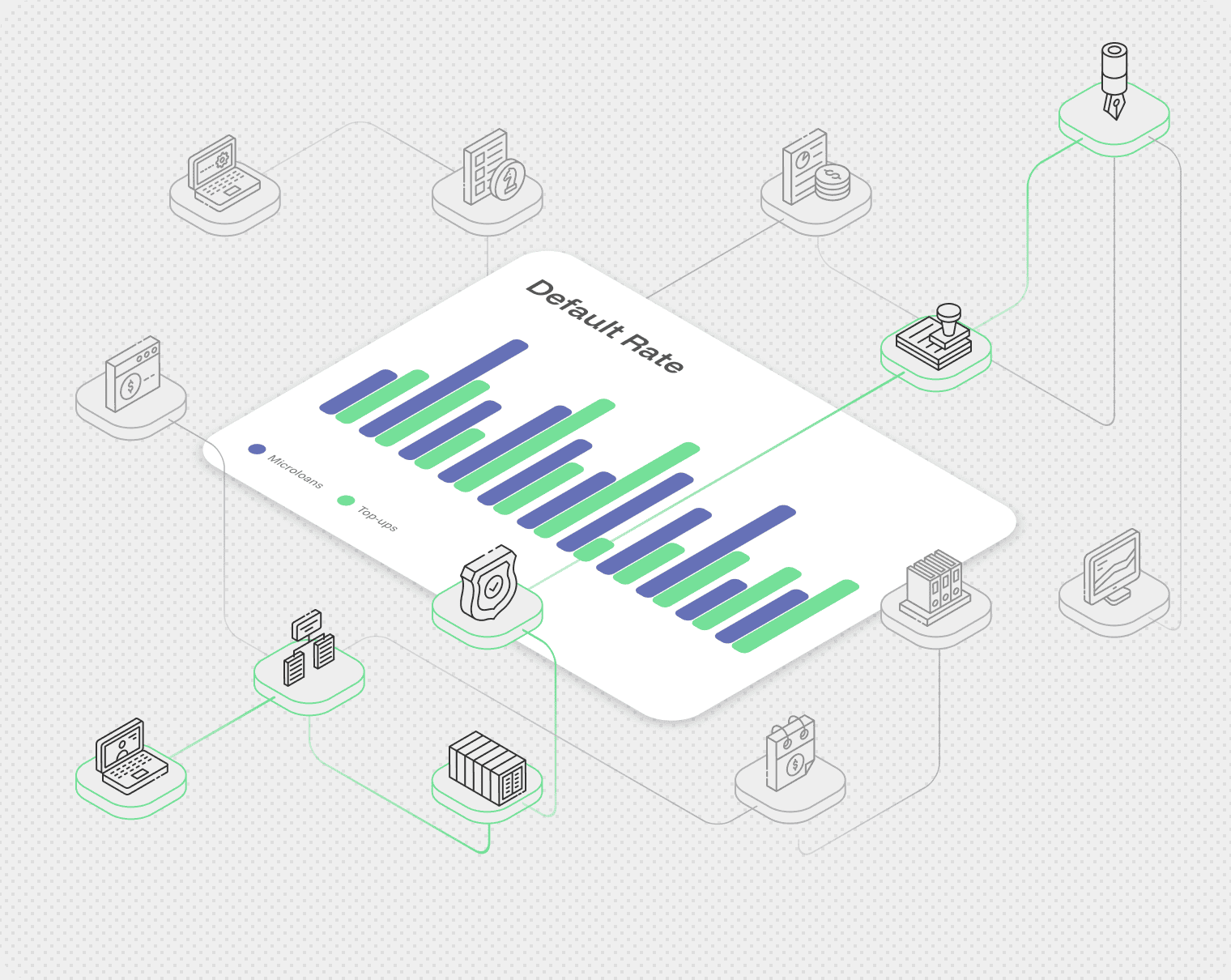
Isometric diagram of the timveroOS Building Platform auto lending integration architecture, with a default rate chart at the centre connected to DMS, bureaus, vehicle valuation, title and eLien rails, payment rails, KYC and AML, core and GL, and comms and CRM nodes
11 FAQ

Auto Lending Software: Common Questions

Common questions from product, risk, and engineering leaders evaluating auto lending software on a Building Platform.

Talk to Our Team
  • What is auto lending software?

    Auto lending software is the technology stack that automates the auto loan lifecycle: dealer onboarding, application capture, KYC and underwriting, funding, title and lien perfection, servicing, collections, and recovery. Modern auto lending software supports direct, indirect, and refinance programs across banks, fintechs, and credit unions. timveroOS is auto lending software built on a Building Platform, with architectural control over every step.

  • How is timveroOS different from typical auto lending SaaS like Solifi or LoanPro?

    Solifi and LoanPro are multi-tenant SaaS platforms. You configure within their schema and wait on their roadmap when your auto lending product needs something new. timveroOS is a lending solution built on a Building Platform. You deploy in your own environment, your team extends building blocks at the architectural level through a Java and Spring Boot SDK, and timveroAI composes new product variants in 3 to 6 weeks instead of vendor roadmap quarters.

  • How long does it take to launch an auto lending product on timveroOS?

    Typical implementation runs 3 to 6 weeks with timveroAI handling 70 to 80 percent of the configuration work. Initial up-and-running on the skeleton happens in under a week. timveroAI composes the Building Platform’s reusable building blocks (entities, state machines, GL posting, dealer flows, eLien rails) into a production-grade auto lending configuration. Your team reviews and extends. No 18-month custom build cycle.

  • Does timveroOS support indirect auto lending through dealer networks?

    Yes. Dealer onboarding (KYB, buy-rate and sell-rate grids, reserve payouts, stips governance) is a first-class capability of the Building Platform, not a marketplace integration. Dealers receive branded portals, widgets, and APIs connected to DMS systems. They submit applications, monitor decisions, and upload stips in real time. Lenders configure programs through the admin panel. Credit union auto loan software and bank indirect auto programs both run on the same platform.

  • What is the Building Platform, and how does it apply to auto lending?

    The Building Platform is the foundation of timveroOS. A set of framework-native building blocks (entities like Participant, Vehicle, Lien; state machines for origination, servicing, recovery; integration adapters; AccrualEngine; GL posting logic) that cover the full lending lifecycle. For auto lending specifically, this means borrowers, co-applicants, guarantors, dealers, and vehicles are modeled as first-class entities, not bolted onto a generic loan record. The platform deploys in your environment with no customization ceiling.

  • Can timveroOS deploy in our own environment for regulatory compliance?

    Yes. The Building Platform deploys in your bank’s, fintech’s, or credit union’s own environment: cloud, private cloud, hybrid, or on-premises. Data, infrastructure, and platform version remain under your control. No multi-tenant data commingling, no forced upgrades on the vendor’s schedule. Compliance configuration (CFPB, FCA, OSFI, regional auto lending regulators) lives transparently as policies on the Building Platform, with immutable audit trails.

  • Does timveroOS support auto title loan products?

    Yes. The Building Platform’s collateral entity model supports vehicle title as a first-class participant, with lien perfection on title or eLien rails. Auto title loan programs configure the same way as direct or indirect auto loans, with policies for LTV, holding periods, and state-specific regulatory requirements as version-controlled rules. This protects compliance posture for auto title loan management software workflows.

  • How does timveroOS handle eLien and title management?

    Lien perfection on title or eLien rails happens inline with funding on the Building Platform. eContracts and eSign flows assemble the funding packet, insurance verification triggers automatically, GAP and VSC product handling configures as policy, and title perfection initiates through state-specific eLien rails. Every step generates an audit trail. Funding exceptions drop because the validation runs before disbursement, not after.
Launch Your Auto Lending Product on timveroOS

$5.5B+ managed across 13+ countries. From signing to first disbursement in 2 to 6 weeks with timveroAI.

Request a Demo