




Fintech Lending Software Built on a Building Platform
Launch BNPL, MCA, POS, or B2B Installment products in weeks, not months. timveroOS gives fintech teams a complete lending solution with a Building Platform underneath: configure product logic in the admin panel, extend in code when you need something unique.
- Launch in Weeks, Not Months
- No Per-Seat or Per-Volume Fees
- Your Stack, Your Rails, Your Brand










timveroOS Is Built for Fintech Teams Who Outgrow SaaS Limits
Lending opex runs 150 to 300 basis points of book. Labour is 55 to 70% of it; technology is 15 to 25%. Procurement optimises the technology line because it has a vendor attached to it, while the line three times larger is treated as fixed. That is the line timveroOS moves.
-
Digital Lenders & Fintechs
You offer BNPL, MCA, POS credit, or installment loans. Your SaaS can’t support your product’s repayment logic or approval flow. You’re patching it with custom middleware. timveroOS gives you the building blocks to configure your product exactly, without starting from scratch.
-
Alternative Lenders
You run working capital, revenue-based finance, or litigation funding. Your loan structure doesn’t fit standard amortization. Every vendor wants you to adapt to their data model. timveroOS lets you define your own product logic using building blocks: entity structure, fee rules, lifecycle events.
-
Embedded Finance Builders
You’re embedding lending into a non-financial product: e-commerce, SaaS, marketplace. You need a white-label borrower experience and API-first architecture. timveroOS provides a white-label borrower portal on the Building Platform, so you brand it fully and integrate via open APIs.


Build Any Fintech Lending Product Without Rebuilding the Platform
-
BNPL / Buy Now Pay Later
Configure short-tenor installment plans, instant approval at checkout, and flexible repayment schedules. Building Platform blocks handle merchant onboarding, soft credit checks, and post-purchase modifications, without code changes per merchant integration.
BNPL Software -
MCA / Merchant Cash Advance
Define factor-rate pricing, daily or weekly remittance schedules, and revenue-based repayment in the admin panel. AccrualEngine supports non-amortizing structures natively, with no shoehorning of MCA into a standard loan schema.
MCA Software -
POS Lending
Embed checkout financing into in-store and online journeys with KYC at the point of sale, instant decisioning, and merchant-side reconciliation. Configure approval thresholds and offer matrices per merchant tier through the Building Platform.
POS Software -
B2B Installment & Working Capital
Run SME credit lines, invoice-based financing, and multi-installment terms with covenant tracking and accounting integrations. Participant building blocks model corporate borrowers, guarantors, and payment networks out of the box.
B2B Installment Software
Payment Rails
Connect ACH, card, and open banking rails via open APIs. Payment connector is a Building Platform block, so you plug in your PSP directly without middleware. Disbursement and collection logic configured in the admin panel, no code changes per provider switch.
- ACH Disbursement and Collection
- Card Payments (Visa, Mastercard)
- Apple Pay / Google Pay
- Open Banking Data Feeds
- PSP Plug-In Without Middleware
KYC / AML Integration
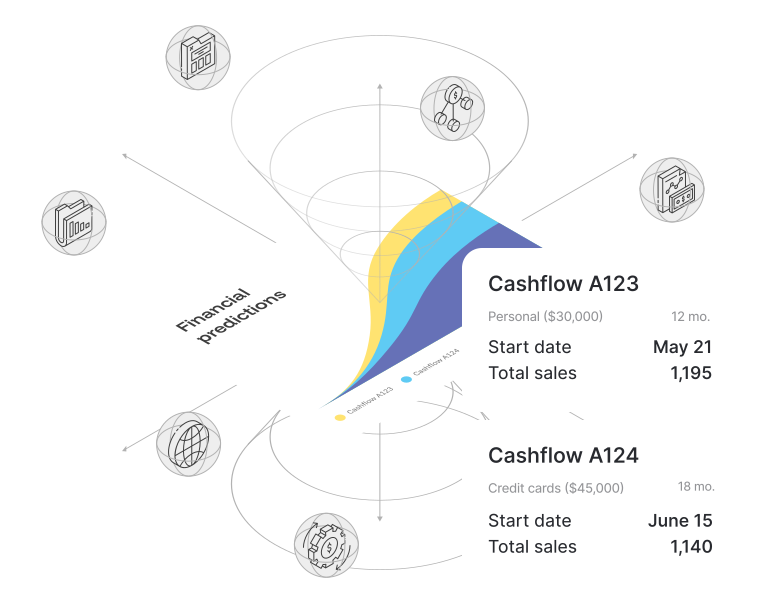
KYC/AML is a building block insertable at any origination step. Connect your preferred provider: Onfido, Sumsub, LexisNexis, or custom. Configure hard stops, soft checks, and manual review flows directly in the admin panel. No code changes required when switching or adding providers.
- Onfido, Sumsub, LexisNexis Support
- Hard Stops and Soft Checks
- Manual Review Flows
- Step-Level KYC Placement in Origination
- New-Provider Switch Without Deployment
Predictable TCO, No Per-Seat Traps
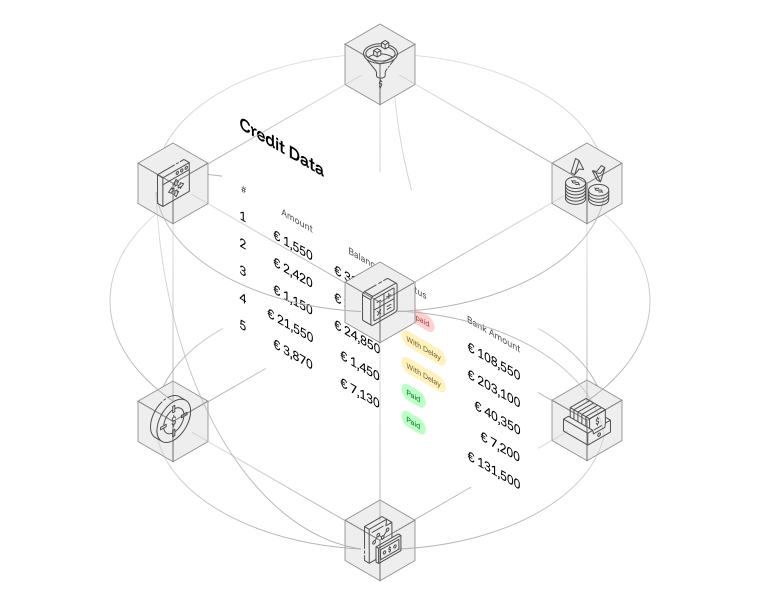
Subscription pricing scales with your portfolio tier, not with the number of users, API calls, or loan volume events. As your origination grows and transaction frequency increases, your platform cost stays predictable. No surprise overage invoices at month-end, no renegotiation as you scale.
- Pricing Tied to Portfolio Size, Not Usage Spikes
- No Per-Seat or Per-User Fees
- No API Call Overages
- No Surprise Invoices at Month-End
- Cost Stays Flat as Transaction Volume Grows
Iterate on Your Credit Product Without Growing the Team
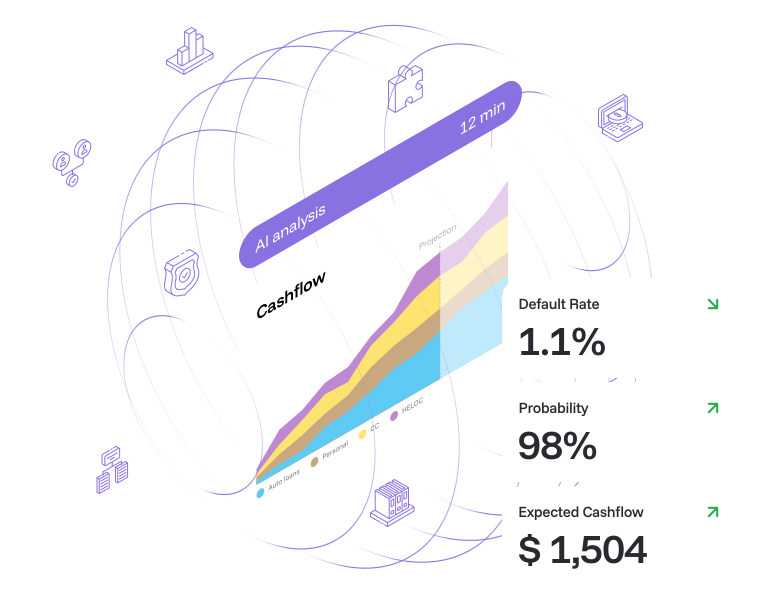
Fintech lenders win on how fast they can test a new plan, price or flow. timveroAI Studio lets your product team describe the change in plain language, try the draft in the same session and send it to your engineers for review. You get the speed of a custom stack, built from verified lending blocks instead of written from scratch.
Explore timveroAI Features-
Ideas Tested Before Sprints
Product owners build and try a hypothesis before engineers are involved. Engineers join only at the final review.
-
No Stack From Scratch
Studio composes from verified lending building blocks, so your team skips rebuilding accruals, ledgers and data plumbing.
-
Your Repo, Your Review
Every change arrives as a pull request in your own repository with its requirement, code and test results.
-
Bring Your Own Model
Connect the AI provider and model your policies allow. Production never depends on the model.


- 42 bps Annual Margin Expansion
- 2–3x Loan Volume at Flat CIR
- Zero No-Code Decision Engine
- <2 sec Automated Decision Time
Why Fintechs Choose timveroOS Over SaaS or Custom Builds
Automating 70% of applications is not automating 70% of the work. Operational effort concentrates: a minority of applications carries the majority of handling minutes, because those are the ones that escalate to senior underwriters, have no template to follow, and generate the audit trail your regulator reads. Configured SaaS stops exactly where that work begins. timveroOS follows your process into it.
SaaS Platforms
Pros
- Fast initial go-live
- Lower upfront cost
- Prebuilt workflows
Cons
- Limited policy/UX flexibility
- Roadmap/data-custody constraints
- Volume/per-seat fees escalate TCO
timveroOS
Features
- Full flexibility without 9-month build
- Your environment, full data custody
- Launch in weeks, not months
- Predictable TCO (no per-seat traps)
- Admin panel (no-code) + SDK (code)
Custom Development
Pros
- Full control of code and UX
- Tailored integrations & data model
- No vendor lock-in
Cons
- 24-month in-house delivery risk
- High build & maintenance cost
- Talent/knowledge concentration risk
SaaS Platforms
Pros
- Fast initial go-live
- Lower upfront cost
- Prebuilt workflows
Cons
- Limited policy/UX flexibility
- Roadmap/data-custody constraints
- Volume/per-seat fees escalate TCO
timveroOS
Features
- Full flexibility without 9-month build
- Your environment, full data custody
- Launch in weeks, not months
- Predictable TCO (no per-seat traps)
- Admin panel (no-code) + SDK (code)
Custom Development
Pros
- Full control of code and UX
- Tailored integrations & data model
- No vendor lock-in
Cons
- 24-month in-house delivery risk
- High build & maintenance cost
- Talent/knowledge concentration risk
Fintechs That Launched on the timveroOS Building Platform
- 80% ready-to-use lending infrastructure supplied

Finom
timveroOS partners with a fast-growing European fintech to launch a multi-country proactive credit product for SMEs delivering full automation, regulatory compliance, and rapid market rollout at a fraction of the cost and time of traditional banking systems.
Read Now - 90% cost reduction compare to the previous solution

Cartiga
timveroOS enables a US-based litigation finance company to launch complex working capital products for law firms while achieving full automation, faster time to market, and significantly lowering costs compared to their previous enterprise platform.
Read Now - 100% bespoke origination requirements coverage

AMIO Bank
timveroOS enabled a leading Armenian bank to transform a complex lending concept with guarantor support into a fully automated, production-ready solution. The platform ensured full compliance and rapid deployment - bringing the new product to market in just six months.
Read Now

Ready to Build Your Fintech Lending Product on a Building Platform?
Talk to the timveroOS team. We’ll walk you through the building blocks for your specific product (BNPL, MCA, installment, or embedded lending) and show you a live demo in your context.